MBTI Personality Type Prediction Model Using WZT Analysis Based on the CNN Ensemble and GAN


RESEARCH (Research Manuscript) Open Access
Human-centric Computing and Information Sciences (2023) 13:14 DOI: https://doi.org/10.22967/HCIS.2023.13.014 Received: September 16, 2022; Accepted: January 31, 2023; Published: March 30, 2023
MBTI Personality Type Prediction Model Using WZT Analysis Based on the CNN Ensemble and GAN
Kyung-yeul Kim1 , Young-bo Yang2 , Mi-ra Kim3 , Ji Su Park4 , and Jihie Kim5,*
Abstract
The Myers-Briggs Type Indicator (MBTI) personality analysis is a well-known method used to perform personality diagnosis of adolescents after a natural language processing analysis using social media data. However, directly using image data to analyze a personality type is insufficient. This research uses directly drawing image data presented by the adolescent using the Wartegg-Zeichen Test (WZT) and predicts MBTI personality types by mixing various representations of the convolutional neural network (CNN) and generative adversarial network (GAN) models. The study aims to analyze the data from 808 junior high school students. We employ a binary approach that divides MBTI personality types into four classes and presents improved prediction performance using the CNN ensemble and GAN techniques. As a result, the initial average predicted value of the CNN is 17.2%, but the average predicted value in the method using the final GAN is 27.2%, indicating an increase of 10%. This study is the first to predict various personality types and automatically analyze drawing images, expressed in the WZT of adolescents based on the deep learning model. Recent deep learning technologies evolve daily, and this study aims to create many opportunities for deep learning applications.
Keywords
MBTI Prediction, CNN Ensemble with GAN, Deep Learning based Personality Analysis, Wartegg-Zeichen Test
1. Introduction
Higher education for adolescents can improve their critical thinking skills for personal growth and is critical for student development [1]. Students are exposed to increasingly challenging and complex situations during the teaching process, and cognitive complexity can increase during the learning process [2]. It is essential to distinguish between differences from other students and those that reflect the student’s cognition or characteristics. Because outward behavior and predictable tendencies toward learning participation are critical elements of intervention in all aspects of teaching [3].
*Corresponding Author: Jihie Kim (jihie.kim@dgu.edu)
2Department of Data Science, Kookmin University, Seoul, Korea
※ This is an Open Access article distributed under the terms of the Creative Commons Attribution Non-Commercial License (http://creativecommons.org/licenses/by-nc/3.0/) which permits unrestricted non-commercial use, distribution, and reproduction in any medium, provided the original work is properly cited.
1Department of Artificial Intelligence, Dongguk University, Seoul, Korea
3Department of Liberal Arts Convergence, Honam University, Gwangju, Korea
4Department of Computer Science, Jeonju University, Jeonju, Korea
Student knowledge is advantageous to teachers unless used in stereotypes or to select or reject students. It is a resource that helps teachers use their natural tendencies and preferences to develop their student’s qualities [4]. Knowing what kind of personality a student has through the Myers-Briggs Type Indicator (MBTI) personality type helps teachers recognize interactions, decision choices, strengths and limitations, and the differences between people of different personality types [5]. As stated in Jung’s psycho-type theory, the facts tend to be orderly and consistent, although individual behavior may appear complex due to diversity [6]. Various diagnostic tools are used for MBTI personality types, most of which are selfreport questionnaires. The disadvantage is that the accuracy is lowered due to defensiveness and insincere responses, so it is difficult to obtain information for actual use [7].
A projective test is performed to compensate for these problems. The projection is a pictorial representation of the direct experience that the subject responds to subconsciously. Projective testing is used to identify anomalous personalities in psychiatry, but is now being developed in various ways depending on the theme [8]. When one projects a picture to a young person, specific patterns depend on the tendency of the young person, and a universal and similar pattern appears in a specific part of the picture.
Selecting the Wartegg-Zeichen test (WZT) for projective tests is useful for youth personality type analysis. Founded by German psychologist Ehrig-Wartegg, the WZT-based personality diagnosis covers various subjects, from infants to adults. Eight pictures are presented in the WZT, and there is also an element of play, which has the advantage that the person inspecting the pictures is unaware that he or she is inspecting them. Psychologists have endeavored to systematically understand personality and have found a link between general personality traits and various behavior types [9, 10].
The MBTI personality types identify differences in normal personality that can lead to poor communication and conflict [11]. The MBTI developers, Isabel Briggs Myers and Katharine Cook Briggs, demonstrated that predicting personality types can be helpful health care, as learners’ learning outcomes depend on their personality types [12]. However, in the previous conventional research, instead of processing image data to investigate individual’s personality type, natural language processing that employs online text, such as on social media, Facebook, and Twitter, is often used.
Automatic personality prediction has received considerable attention from natural language processing and social science communities [13]. Because the questionnaire survey and projection methods for character-type evaluation involve qualified experts evaluation, obtaining the results takes considerable time and expense. In addition, considering the analysis needed for the image dataset, from a modeling perspective, it makes sense to use a deep learning model [14], which is a subfield of machine learning that uses artificial neural networks.
Developing convolutional neural network (CNN) models that train on image data using deep learning has contributed to achieving improved accuracy [15]. Automation with the CNN ensemble can mitigate the cost and improve the process. The CNN is a widely used method for extracting complex visual features from digital images, and we use the CNN model to extract functionality from images [16, 17]. In visual work, CNNs are the most commonly used and provide good results personality detection [18, 19]. Image classification performance requires many training images. Increasing the data using a generative adversarial network (GAN) can preserve the characteristics of student-created WZTs, secures image data, and prediction rates.
This study predicted 16 personality types of MBTI using the CNN model for images displayed in the WZT of adolescents. The CNN ensemble and GAN techniques increase the predictive value of the MBTI personality types. This research creates many opportunities to use deep learning to predict the MBTI personality type by discovering the unique characteristics of an individual from pictures created directly by the students.
We organized the paper as follows: Section 1 gives an overview of MBTI as it affects the community; Section 2 provides a related work overview of CNN ensemble with GAN as an approach for MBTI personality prediction; Section 3 presents the proposed method for prediction model pipeline MBTI personality type, using binary classification, personality analysis sequences, and deep learning based ersonality analysis in CNN ensemble with GAN; Section 4 presents the results of the proposed method and discusses the results; and finally, Section 5 concludes the paper.
3. Methods for Predicting the MBTI Personality Type
3.1 CNN Ensemble
To predict the personality type of MBTI, 16 ratings were divided into multi-class classifications. We clearly show in Table 2 the ratio of a dataset is the number of samples used for training, validation, and death; 63% (4,077) of data for training, 27% (1,747) of data for verification, and 10% (640) of data for testing were used separately.
Fig. 1 illustrates that learning and evaluation were repeated to use the CNN ensemble and to train the original image, random sampling, data augmentation, and class weight prediction models. By comparing the predictive model performance evaluation with the performance evaluation on the CNN ensemble, we selected a satisfactorily performing model as a predictive model that classifies MBTI personality types.
| Table 2. Detailed training, verification, test percentage, |
and number of datasets | ||
|---|---|---|---|
| —————————————————————— | – | – | ———————— |
| Training data | Verification data | Test data | Total | |
|---|---|---|---|---|
| Proportion (%) | 63 | 27 | 10 | 100 |
| Drawing image piece | 4,077 | 1,747 | 640 | 6,464 |
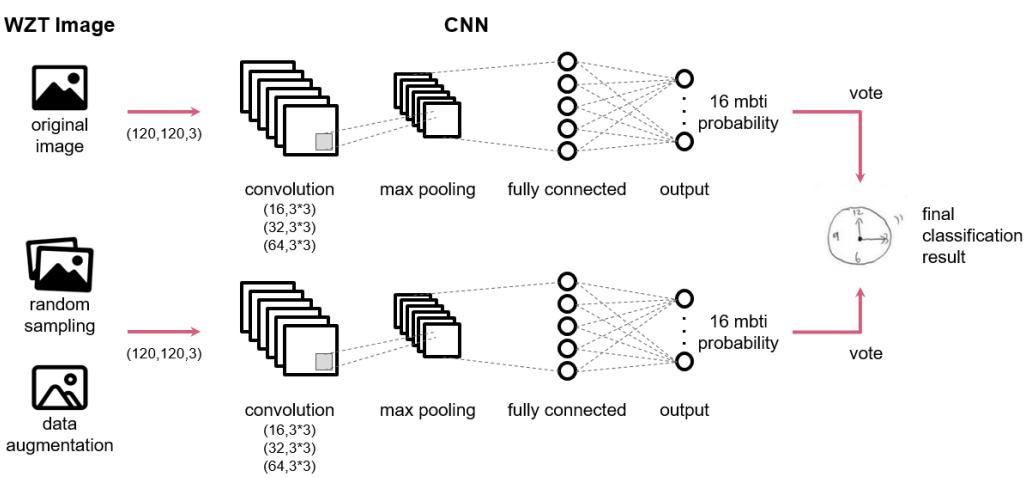
Fig. 1. Prediction model pipeline Myers-Briggs Type Indicator (MBTI) personality type.
Random sampling is a method with the same selection chance for all elements of a population. The random sampling extraction method has an acceptable classification error, and it is relatively easy to analyze the data. As the given data are limited, bias and overfitting problems can occur. This research expanded the dataset that can be learned using data augmentation. Weight adjustment is a method of finding the desired correct answer by assigning an initial weight value in learning to optimize it by changing the value. This research used various changes in weight values. This paper uses the CNN ensemble as a model for learning using the original image, random sampling, data augmentation, and class weight. The average accuracy and personality types were classified.
3.2 Binary Classification
We generated four binary classification prediction models that classify the dataset into E–I, S–N, T– F, and J–P, and measured the accuracy by combining the four prediction values. Reveals that the accuracy increased using binary classification, and the MBTI was predicted for four personality positions and then combined to measure the accuracy. When training four binary classification prediction models, we used the pipeline in Fig. 2 to select the model influencing learning.
3.3 Myers-Briggs Type Indicator Personality Analysis Sequences
A binary classification prediction model is generated so that predictions can be made using the personality analysis sequence at each location of the MBTI. To achieve the highest result according to Jung’s sensing and intuition, the order of analysis starts from S–N and learns in the order of T–F, J–P, and E–I.
Fig. 3. illustrates that if the S–N binary classification predicts S based on the predicted value, sensing and thinking (ST) or sensing and feeling (SF) is predicted through the sensing T–F (S–TF) binary classification model, and the binary classification prediction model to be used next is determined
according to the result. In each case, we created a binary classification prediction with 15 prediction models. When training 15 binary classification prediction models, we saved the model using random sampling and applied image proliferation and weight adjustment to select the model that affects training.
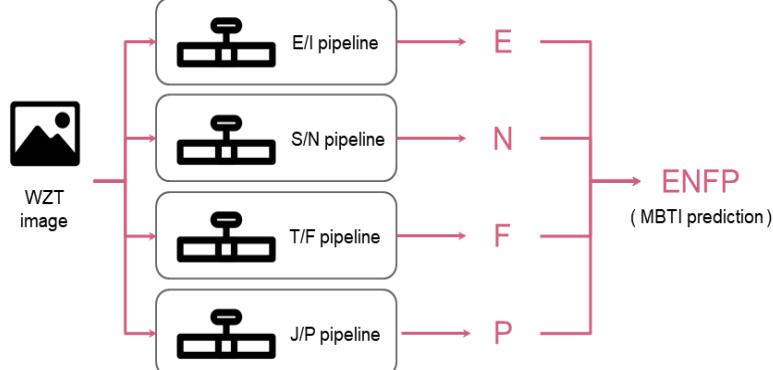
Fig. 2. Myers-Briggs Type Indicator (MBTI) personality prediction using binary classification.
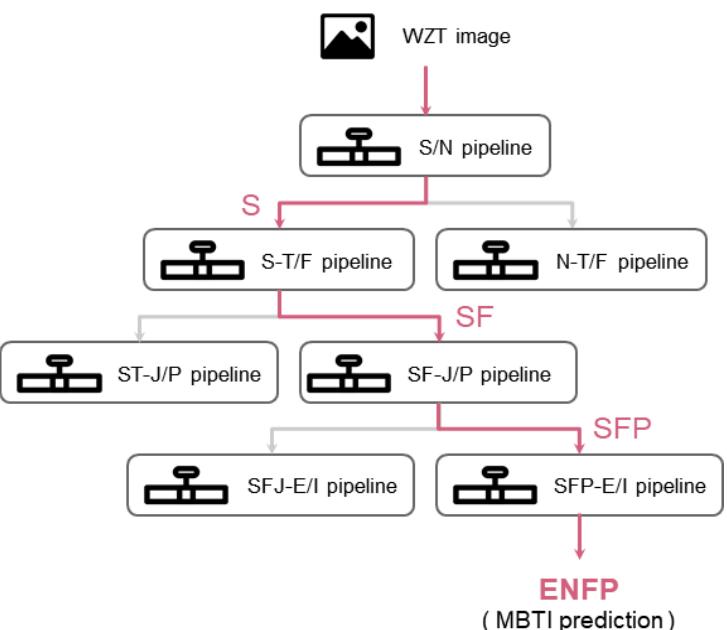
Fig. 3. MBTI example of MBTI prediction model using personality analysis sequences.
3.4 Generative Adversarial Network
The image classification performance has mixed results depending on the trained image. Maintaining image features carefully and reinforcing various images is a method to prepare for performance degradation [37]. The GAN reinforces the image while preserving the characteristics of the student’s WZT drawings. This study used an open image with style transfer and GAN. An example of using GAN for MBTI personality type prediction is depicted Fig. 4.
A common characteristic of the WZT drawing created by students is the many blank spaces in the picture, which makes it is difficult to determine characteristics from the picture. In this research, we apply style transfer, one of the GAN methodologies, to compensate for this. The image from the WZT created by the students was not deformed, and the pattern was revealed by combining noise using the GAN in the margin [38].
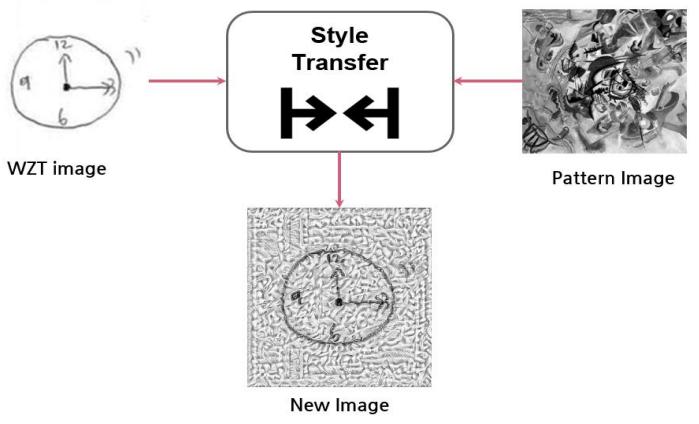
Fig. 4. Personality prediction type for general adversarial network for Myers-Briggs type.
4. Deep Learning for Predicting MBTI and a WZT Image
4.1 MBTI 16 Personality Types
The research target comprised 813 junior high students, and the WZT was conducted from April 2012 to March 2013. Data from images appearing in the 813 WZTs without the following existing types were removed, and the final dataset of 808 was analyzed. The data distribution and frequency in the dataset are presented in Fig. 5.
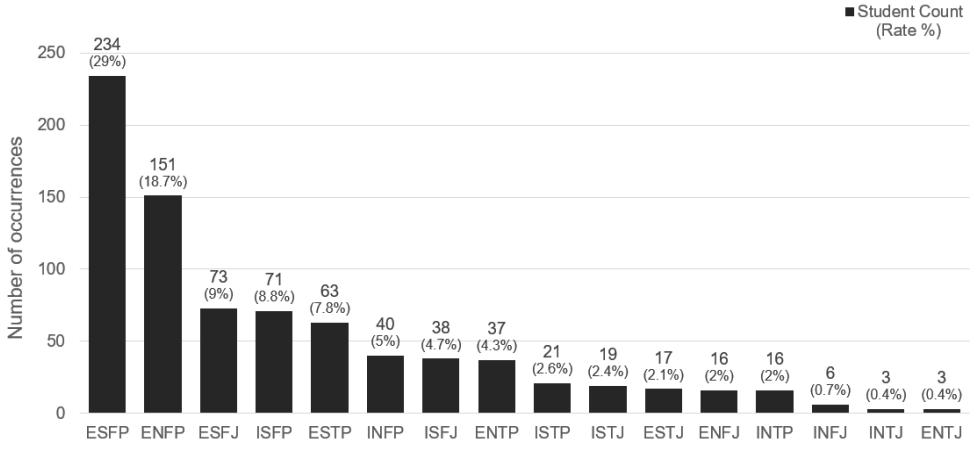
Fig. 5. Distribution and frequency of MBTI personality types for 808 people.
The data for the 16 personality types are uneven and biased. For example, there are 234 ESFPs, and only three each of INTJs and ENTJs. There was a data imbalance in the dataset, with a bias toward a particular personality type. Overall, ESFP was 29.0%, followed by ENFP at 18.7% for most personality types. In addition, INFJ, INTJ, and ENTJ were the personality types with the lowest distribution at less than 1%. This study has experimented with various methods to analyze the character-type disproportionate distribution of the dataset and the unformatted WZT images.
4.2 CNN Ensemble
This paper uses the CNN ensemble as a model for random sampling, data augmentation, and class weight learning. Eight personality types were classified with an average accuracy of 17.2%. At the highest value, ESFP had an accuracy of 42.9%. As the lowest value, ENTP reached an accuracy of 3.1%. Moreover, INFP, ISTP, INTP, ISTJ, ESTJ, ENTJ, INTJ, and INFJ were unpredictable. The results are listed in Table 3.
| Myers-Briggs Type Indicator | Number of correct answers | Number of data | Accuracy(%) |
|---|---|---|---|
| ESFP | 79 | 184 | 42.9 |
| ESFJ | 11 | 64 | 17.2 |
| ENFP | 9 | 88 | 10.2 |
| ESTP | 7 | 40 | 17.5 |
| ISFP | 1 | 16 | 6.3 |
| ENTP | 1 | 56 | 1.8 |
| ENFJ | 1 | 8 | 12.5 |
| ISFJ | 1 | 32 | 3.1 |
| … | … | … | … |
| SUM | 110 | 640 | 17.2 |
Table 3. Convolutional neural network ensemble prediction
E=extroversion, I=introversion, S=sensing, I=intuition, T=thinking, F=feeling, J=judgement, P=perception., The bold fonts indicate the highest and lowest.
4.3 Binary Classification Prediction Results
For the binary classification ensemble, random sampling, data augmentation, and class weight models were used. Of these, random sampling exhibited the best results. The average accuracy values for the E– I, S–N, T–F, and J–P binary classifications were at 61.4%, 64.2%, 62.8%, and 68.6%, respectively. The results are provided in Table 4.
This research classified nine character-types with 18.4% accuracy when using a random sampling CNN ensemble as a training model. At the highest value, ESFP reached an accuracy of 49.5%. The lowest value was for ISFJ, with an accuracy 3.1%. In addition, INFP, ISTP, INTP, ISTJ, ENTJ, INTJ, and ENFJ were unpredictable. The results are presented in Table 5.
| Myers-Briggs Type Indicator | Number of correct answers |
Number of data | Accuracy (%) | Model selected and CNN ensemble |
|---|---|---|---|---|
| Extroversion | 323 | 472 | 68.4 | Random sampling |
| Introversion | 70 | 168 | 41.7 | |
| SUM | 393 | 640 | 61.4 | |
| Sensing | 377 | 400 | 94.2 | Random sampling, |
| iNtuition | 34 | 240 | 14.2 | Data augmentation, |
| SUM | 411 | 640 | 64.2 | Class weight |
| Thinking | 354 | 432 | 81.9 | Random sampling |
| Feeling | 48 | 208 | 23.1 | |
| SUM | 402 | 640 | 62.8 | |
| Judgement | 25 | 168 | 14.9 | Random sampling |
| Perception | 414 | 472 | 87.7 | |
| SUM | 423 | 640 | 68.6 |
Table 4. Prediction using binary classification with CNN ensemble
| Table 5. MBTI model using binary classification and CNN ensemble |
|
|---|---|
| ————————————————————————— | – |
| Myers-Briggs Type Indicator | Number of correct answers | Number of data | Accuracy(%) |
|---|---|---|---|
| ESFP | 91 | 184 | 49.5 |
| ENFP | 7 | 88 | 8.0 |
| ISFP | 6 | 16 | 37.5 |
| ESFJ | 5 | 64 | 7.8 |
| ESTP | 4 | 40 | 10.0 |
| ENTP | 2 | 56 | 3.6 |
| ESTJ | 1 | 16 | 6.3 |
| INFJ | 1 | 8 | 12.5 |
| ISFJ | 1 | 32 | 3.1 |
| … | … | … | … |
| SUM | 118 | 640 | 18.4 |
E=extroversion, I=introversion, S=sensing, I=intuition, T=thinking, F=feeling, J=judgement, P=perception., The bold fonts indicate the highest and lowest.
4.4 Binary Classification using the MBTI Analysis Sequence
Various methods were tested and compared to enhance the accuracy of MBTI prediction. We achieved slightly higher accuracy in line with Jung’s sensing and intuition. The MBTI analysis sequence starts with S/N and generates binary classification prediction models to make predictions in the order of T–F, J–P, and E–I. We created a binary classification predictive model for all cases, creating 15 predictive models. When training 15 binary classification prediction models, we saved the models with random sampling and applied image multiplication and weight adjustment to select models that influence learning. The results are provided in Table 6.
Biased data tend to cause overfitting problems and lead to poor performance. Oversampling was applied to skewed data to make them evenly distributed. We used binary classification to predict the personality type, and the CNN ensemble to predict the 16 MBTI personality types to enhance the results. In addition, ENTP, INFP, INTP, ISTJ, ENTJ, INTJ, ENFJ, and INFJ were unpredictable. Table 7 presents the final MBTI personalities predicted by the 15 models that employed the MBTI analysis sequence.
This research classified eight character-types with 22.5% accuracy. At the highest value, ESFP reached an accuracy of 55.4%. The lowest value was for ISFP, with an accuracy of 6.3%. Moreover, INFP, INTP, ISTJ, ENTJ, INTJ, ENFJ, and INFJ were unpredictable. The fact that the dichotomy is an integral part of predicting MBTI led to the same conclusion as in previous studies [39].
4.5 MBTI Prediction using a GAN
Using the GAN enhanced the results in predicting the 16 MBTI personality types. In this study, we classified the accuracy of nine personality types at 27.2%. At the highest value, ESFP reached an accuracy of 70.1%. The lowest values were ISTP and ISFJ, with an accuracy of 3.1%. Further, INFP, INTP, ISFP, ISTJ, INTJ, ENFJ, and INFJ were unpredictable. The results given in Table 8.
5. Conclusion
No matter how accurate the MBTI is, no one can explain all the human complexity. However, all types that MBTI indicators represent are worth understanding. Predicting personality using MBTI is a daunting task. The MBTI presents ways to teach students who have difficulty adapting to school, and helps effectively plan and implement learning and teaching methods. The MBTI personality type test was
Page 10 / 14 MBTI Personality Type Prediction Model Using WZT Analysis Based on the CNN Ensemble and GAN Table 6. Binary classification prediction using the MBTI analysis sequence with CNN ensemble
| Myers-Briggs Type Indicator | Number of correct answers |
Number of data | Accuracy (%) | Model selected and CNN ensemble |
|---|---|---|---|---|
| S | 377 | 400 | 94.2 | Random sampling, |
| N | 34 | 240 | 14.2 | Data augmentation, |
| SUM | 411 | 640 | 64.2 | Class weight |
| ST | 28 | 104 | 26.9 | Random sampling |
| SF | 249 | 296 | 84.1 | |
| SUM | 277 | 400 | 69.2 | |
| NT | 28 | 104 | 26.9 | Random sampling |
| NF | 113 | 136 | 83.1 | |
| SUM | 141 | 240 | 58.8 | |
| ST-J | 13 | 32 | 40.6 | Random sampling, |
| ST-P | 51 | 72 | 70.8 | Data augmentation, |
| SUM | 64 | 104 | 61.5 | Class weight |
| SF-J | 33 | 96 | 34.4 | Random sampling |
| SF-P | 159 | 200 | 79.5 | |
| SUM | 192 | 296 | 64.9 | |
| NT-J | 3 | 24 | 12.5 | Random sampling |
| NT-P | 71 | 80 | 88.8 | |
| SUM | 74 | 104 | 71.2 | |
| NF-J | 2 | 16 | 12.5 | Random sampling, |
| NF-P | 112 | 120 | 93.3 | |
| SUM | 114 | 136 | 83.8 | |
| ESTJ | 14 | 16 | 87.5 | Random sampling |
| ISTJ | 3 | 16 | 18.8 | |
| SUM | 17 | 32 | 53.1 | |
| ISTP | 24 | 32 | 75.0 | Random sampling |
| ESTP | 22 | 40 | 55.0 | |
| SUM | 46 | 72 | 63.9 | |
| ESFJ | 43 | 64 | 67.2 | Random sampling |
| ISFJ | 15 | 32 | 46.9 | |
| SUM | 58 | 96 | 60.4 | |
| ESFP | 157 | 184 | 85.3 | Random sampling |
| ISFP | 3 | 16 | 18.8 | |
| SUM | 160 | 200 | 80.0 | |
| ENTJ | 14 | 16 | 87.5 | Random sampling |
| INTJ | 1 | 8 | 12.5 | |
| SUM | 15 | 24 | 62.5 | |
| ENTP | 53 | 56 | 94.6 | Random sampling |
| INTP | 2 | 24 | 8.3 | |
| SUM | 55 | 80 | 68.8 | |
| ENFJ | 6 | 8 | 75.0 | Random sampling |
| INFJ | 5 | 8 | 62.5 | |
| SUM | 11 | 16 | 68.8 | |
| ENFP | 87 | 88 | 98.9 | Random sampling |
| INFP | 2 | 32 | 6.2 | |
| SUM | 89 | 120 | 74.2 |
E=extroversion, I=introversion, S=sensing, I=intuition, T=thinking, F=feeling, J=judgement, P=perception.
Table 7. MBTI prediction result using the MBTI analysis sequence and the CNN ensemble
| Myers-Briggs Type Indicator | Number of correct answers | Number of data | Accuracy(%) |
|---|---|---|---|
| ESFP | 102 | 184 | 55.4 |
| ESFJ | 18 | 64 | 28.1 |
| ENFP | 6 | 88 | 6.8 |
| ISFJ | 6 | 32 | 18.8 |
| ISTP | 4 | 32 | 12.5 |
| ESTP | 4 | 40 | 10.0 |
| ESTJ | 3 | 16 | 18.8 |
| ISFP | 1 | 16 | 6.3 |
| … | … | … | … |
| SUM | 144 | 640 | 22.5 |
E=extroversion, I=introversion, S=sensing, I=intuition, T=thinking, F=feeling, J=judgement, P=perception., The bold fonts indicate the highest and lowest.
| Myers-Briggs Type Indicator | Number of correct answers | Number of data | Accuracy(%) |
|---|---|---|---|
| ESFP | 129 | 184 | 70.1 |
| ESFJ | 18 | 64 | 28.1 |
| ENFP | 13 | 88 | 14.8 |
| ESTP | 4 | 40 | 10.0 |
| ESTJ | 3 | 16 | 18.8 |
| ENTJ | 3 | 16 | 18.8 |
| ENTP | 2 | 56 | 3.6 |
| ISTP | 1 | 32 | 3.1 |
| ISFJ | 1 | 32 | 3.1 |
| … | … | … | … |
| SUM | 174 | 640 | 27.2 |
Table 8. MBTI prediction result using the MBTI analysis sequence with a GAN
E=extroversion, I=introversion, S=sensing, I=intuition, T=thinking, F=feeling, J=judgement, P=perception., The bold fonts indicate the highest and lowest.
developed to make Jung’s psycho-type theory more useful in everyday life. The diversity of human behavior is due to the different characteristics of an individual’s perception and judgment [6]. The difficulty of predicting all 16 personality types is that there are many overlaps between classes, but if only one mistake is made, the personality is entirely different. For example, INTJ and INTP have overlapping details, and even when small mistakes are made, they become entirely different classes. Nonetheless, deep learning seems to be very helpful for prediction.
In this study, 16 personality types were predicted for the first time after an automatic analysis using a deep learning employing the pictures represented by the WZT drawing examination of adolescents. The class distribution of the MBTI dataset is imbalanced, but this study used GAN-based data growth to mitigate the problem. Then, efforts were made to balance the image data, and 16 character-types were predicted after binary analysis to improve the prediction accuracy. As a result, the initial average predicted value of the CNN increased to 17.2%; the average predicted value of the CNN ensemble increased to 18.4%, and the average predicted value using the final generative adversarial network increased to 27.2%. These have led to a 10% increase in the average predicted value, revealing that 9 MBTI personality types could be predicted with higher accuracy values.
The accuracy of ESFP was the highest, increasing by 14.7%, from 55.4% to 70.1%. In addition, ENTJ was predicted at 18.8% accuracy, and ENTP was predicted at 3.6% accuracy. Various personality types could be predicted. It may be significant that more data are needed for accurate predictions so that Page 12 / 14 MBTI Personality Type Prediction Model Using WZT Analysis Based on the CNN Ensemble and GAN different personality types can be predicted. If the personality character type is detected by automation, it could promote the development of various applications and be used in a broader range of fields. However, poor data issues can lead to inefficiencies in determining an individual’s personality type.
Recent deep learning techniques are evolving daily and have demonstrated result sufficient to make reliable personality predictions. This study is the first to introduces a study that predicts the type of MBTI personality by finding unique characteristics of an individual from pictures created directly by students. If sufficient data are available using text and complex patterns of images to which a projective test can be applied, models that automatically apply them in many fields can be studied. It is expected that this could create many opportunities for employing deep learning.
Funding
This research was supported by the MSIT (Ministry of Science, ICT), Korea, under the Information Technology Research Center support program (No. IITP-2022-2020-0-01789; 50%) and under the High-Potential Individuals Global Training Program (No. RS-2022-00155054; 50%), supervised by the IITP (Institute for Information & Communications Technology Planning & Evaluation).
Competing Interests
The authors declare that they have no competing interests.
References
- [1] L. Smail and G. Silvera, “American universities in the Middle East: a student’s perspective,” Cogent Education, vol. 5, no. 1, article no. 1447228, 2018. https://doi.org/10.1080/2331186X.2018.1447228
- [2] W, G. Perry, Forms of Intellectual and Ethical Development in the College Years: A Scheme. San Francisco, CA: Jossey-Bass Publishers, 1999.
- [3] D. W. Salter, N. J. Evans, and D. S. Forney, “A longitudinal study of learning style preferences on the Myers-Briggs type indicator and learning style inventory,” Journal of College Student Development, vol. 47, no. 2, pp. 173-184, 2006.
- [4] C. Reardon MacLellan, “Differences in Myers-Briggs personality types among high school band, orchestra, and choir members,” Journal of Research in Music Education, vol. 59, no. 1, pp. 85-100, 2011.
- [5] L. S. Moore, T. J. Dietz, and D. A. Jenkins, “Adapting social work education to student diversity: the use of the Myers-Briggs type indicator in curriculum development,” Journal of Teaching in Social Work, vol. 16, no. 1-2, pp. 179-201, 1998.
- [6] I. B. Myers, M. H. McCaulley, and N. L. Quenk, and A. L. Hammer, MBTI Manual: A Guide to the Development and Use of the Myers-Briggs Type Indicator, 3rd ed. Palo Alto, CA: Consulting Psychologists Press, 1998.
- [7] N. A. Schaubhut, N. A. Herk, and R. C. Thompson, “MBTI Form M Manual Supplement,” 2009 [Online]. Available: https://www.themyersbriggs.com/en-US/Support/MBTI-manual-supplements.
- [8] C. E. Mattlar, T. Lindholm, A. Haasiosalo, P. Vesala, S. Rissanen, H. Santasalo, J. Veijola, V. Lehtinen, and P. Puukka, “Interrater agreement when assessing alexithymia using the Drawing Completion Test (Wartegg Zeichentest),” Psychotherapy and Psychosomatics, vol. 56, no. 1-2, pp. 98-101, 1991.
- [9] J. Golbeck, C. Robles, M. Edmondson, and K. Turner, “Predicting personality from twitter,” in Proceedings of 2011 IEEE 3rd International Conference on Privacy, Security, risk and Trust and 2011 IEEE 3rd International Conference on Social Computing, Boston, MA, 2011, pp. 149-156.
- [10] A. Crisi and F. Dentale, “The Wartegg Drawing Completion Test: inter-rater agreement and criterion validity of three new scoring categories,” International Journal of Psychology and Psychological Therapy, vol. 16, no. 1, pp. 83-90, 2016.
- [11] K. Myers, “Isabel Briggs Myers and type development,” Bulletin of Psychological Type, vol. 26, no. 4, pp. 6-8, 1993.
- [12] M. Mitchell, K. Hollingshead, and G. Coppersmith, “Quantifying the language of schizophrenia in social media,” in Proceedings of the 2nd Workshop on Computational Linguistics and Clinical Psychology: From Linguistic Signal to Clinical Reality, Denver, CO, 2015, pp. 11-20.
- [13] M. Gjurkovic and J. Snajder, “Reddit: a gold mine for personality prediction,” in Proceedings of the 2nd Workshop on Computational Modeling of People’s Opinions, Personality, and Emotions in Social Media, New Orleans, LA, 2018, pp. 87-97.
- [14] N. Cerkez, B. Vrdoljak, and S. Skansi, “A method for MBTI classification based on impact of class components,” IEEE Access, vol. 9, pp. 146550-146567, 2021.
- [15] C. Szegedy, S. Ioffe, V. Vanhoucke, and A. Alemi, “Inception-v4, Inception-ResNet and the impact of residual connections on learning,” Proceedings of the AAAI Conference on Artificial Intelligence, vol. 31, no. 1, pp. 4278-4284, 2017.
- [16] S. Bibi, A. Abbasi, I. U. Haq, S. W. Baik, and A. Ullah, “Digital image forgery detection using deep autoencoder and CNN features,” Human-centric Computing and Information Sciences, vol. 11, article no. 32, 2021. https://doi.org/10.22967/HCIS.2021.11.032
- [17] W. Song, L. Zhang, Y. Tian, S. Fong, J. Liu, and A. Gozho, “CNN-based 3D object classification using Hough space of LiDAR point clouds,” Human-centric Computing and Information Sciences, vol. 10, article no. 19, 2020. https://doi.org/10.1186/s13673-020-00228-8
- [18] Y. Mehta, N. Majumder, A. Gelbukh, and E. Cambria, “Recent trends in deep learning based personality detection,” Artificial Intelligence Review, vol. 53, pp. 2313-2339, 2020.
- [19] S. H. Park, K. H. Lee, J. S. Park, and Y. S. Shin, “Deep learning-based defect detection for sustainable smart manufacturing,” Sustainability, vol. 14, no. 5, article no. 2697, 2022. https://doi.org/10.3390/su14052697
- [20] J. Soilevuo Gronnerod and C. Gronnerod, “The Wartegg Zeichen Test: a literature overview and a metaanalysis of reliability and validity,” Psychological Assessment, vol. 24, no. 2, pp. 476-489, 2012.
- [21] E. Roivainen and P. Ruuska, “The use of projective drawings to assess alexithymia,” European Journal of Psychological Assessment, vol. 21, no. 3, pp. 199-201, 2005.
- [22] C. G. Jung, Mysterium Coniunctionis (Collected Works of C.G. Jung, Volume 14). Princeton, NJ: Princeton University Press, 2014.
- [23] Y. Justindhas, S. M. Mohanraj, and R. Shivani, “A synoptic survey on personality prediction system using MBTI,” in Proceedings of 2022 3rd International Conference on Electronics and Sustainable Communication Systems (ICESC), Coimbatore, India, 2022, pp. 950-955.
- [24] N. Cerkez and V. Vareskic, “Machine learning approaches to personality classification on imbalanced MBTI datasets,” in Proceedings of 2021 44th International Convention on Information, Communication and Electronic Technology (MIPRO), Opatija, Croatia, 2021, pp. 1259-1264.
- [25] A. Lazar and A. Mosek, “The influence of the field instructor-student relationship on evaluation of students’ practice,” The Clinical Supervisor, vol. 11, no. 1, pp. 111-120, 1993.
- [26] M. L. Ellison, “Critical field instructor behaviors: student and field instructor views,” Arete, vol. 18, no. 2, pp. 12-20, 1994.
- [27] M. K. Kim, “Epileptic seizure detection using CNN ensemble models based on overlapping segments of EEG signals,” KIPS Transactions on Software and Data Engineering, vol. 10, no. 12, pp. 587-594, 2021.
- [28] M. Amin-Naji, A. Aghagolzadeh, and M. Ezoji, “Ensemble of CNN for multi-focus image fusion,” Information Fusion, vol. 51, pp. 201-214, 2019.
- [29] K. Jhang, “Voting and ensemble schemes based on CNN models for photo-based gender prediction,” Journal of Information Processing Systems, vol. 16, no. 4, pp. 809-819, 2020.
- [30] Y. Liu, H. Pu, and D. W. Sun, “Efficient extraction of deep image features using convolutional neural network (CNN) for applications in detecting and analysing complex food matrices,” Trends in Food Science & Technology, vol. 113, pp. 193-204, 2021.
Page 14 / 14 MBTI Personality Type Prediction Model Using WZT Analysis Based on the CNN Ensemble and GAN
- [31] Q. He, Z. Li, W. Gao, H. Chen, X. Wu, X. Cheng, and B. Lin, “Predictive models for daylight performance of general floorplans based on CNN and GAN: a proof-of-concept study,” Building and Environment, vol. 206, article no. 108346, 2021. https://doi.org/10.1016/j.buildenv.2021.108346
- [32] N. Hussain, M. A. Khan, S. Kadry, U. Tariq, R. R. Mostafa, J. I. Choi, and Y. Nam, “Intelligent deep learning and improved whale optimization algorithm based framework for object recognition,” Humancentric Computing and Information Sciences, vol. 11, article no. 34, 2021. https://doi.org/10.1109/HCIS.2021.11.034
- [33] C. Li, M. Hancock, B. Bowles, O. Hancock, L. Perg, P. Brown, et al., “Feature extraction from social media posts for psychometric typing of participants,” in Augmented Cognition: Intelligent Technologies. Cham, Switzerland: Springer, 2018, pp. 267-286.
- [34] L. C. Lukito, A. Erwin, J. Purnama, and W. Danoekoesoemo, “Social media user personality classification using computational linguistic,” in Proceedings of 2016 8th International Conference on Information Technology and Electrical Engineering (ICITEE), Yogyakarta, Indonesia, 2016, pp. 1-6.
- [35] M. Gjurkovic, M. Karan, I. Vukojevic, M. Bosnjak, and J. Snajder, “Pandora talks: personality and demographics on reddit,” 2020 [Online]. Available: https://arxiv.org/abs/2004.04460.
- [36] A. S. Khan, A. Hussain, M. Z. Asghar, F. K. Saddozai, A. Arif, and H. A. Khalid, “Personality classification from online text using machine learning approach,” International Journal of Advanced Computer Science and Applications, vol. 11, no. 3, pp. 460-476, 2020.
- [37] D. H. Lee, Y. Li, and B. S. Shin, “Generalization of intensity distribution of medical images using GANs,” Human-centric Computing and Information Sciences, vol. 10, article no. 17, 2020. https://doi.org/10.1186/s13673-020-00220-2
- [38] D. Mukherkjee, P. Saha, D. Kaplun, A. Sinitca, and R. Sarkar, “Brain tumor image generation using an aggregation of GAN models with style transfer,” Scientific Reports, vol. 12, article no. 9141, 2022. https://doi.org/10.1038/s41598-022-12646-y
- [39] V. Lynn, N. Balasubramanian, and H. A. Schwartz, “Hierarchical modeling for user personality prediction: the role of message-level attention,” in Proceedings of the 58th Annual Meeting of the Association for Computational Linguistics, Virtual Event, 2020, pp. 5306-5316.